




This post begins with a simple truth: even experienced DBAs can feel like novices when stepping into a different database for the first time. When I first moved from Oracle to PostgreSQL, I quickly realized how much I relied on practical references—and how badly I needed a new one.
That challenge became the inspiration for me to write a PostgreSQL reference guide.
My journey from Oracle DBA to PostgreSQL beginner

I was once the Oracle DBA who had to transition to Postgres. After years of Oracle commands engraved in my memory, I suddenly found myself back in beginner mode, learning new concepts and a whole new set of commands. It was not easy for me to digest these ideas or quickly find the Postgres equivalents for tasks that used to be second nature. Simple things like creating users, checking performance, backing up a database, suddenly required extra research and trial and error.
To survive, I started doing something familiar to the beginning of my Oracle days: I built a new cheat sheet.
I began collecting tips, writing down commands, and keeping a running list of reference points. This was a habit my original Oracle trainer and mentor had drilled into me early in my career. He would always say, “You do not need to know every answer. You just need to know where to find it.” That advice stayed with me, and it became the foundation of how I approached this transition.
In technology, having a solid reference can be the key to solving problems quickly and confidently. This book is not meant to solve every Postgres problem you will ever face. Instead, its’ designed to give you quick tips, practical examples, and clear reference points, if you are a novice Postgres user or an experienced user coming from another database and trying to find your footing.
A practical companion for your PostgreSQL journey
 When I look back on my consulting days, I always carried a couple of trusted books and a small stack of notes in my bag. I was constantly moving from assignment to assignment, walking into different companies, each with unique use cases and challenging environments. My notes, cheat sheets, and reference materials were my safety net. They helped me ramp up faster, ask better questions, and complete my assignments on time.
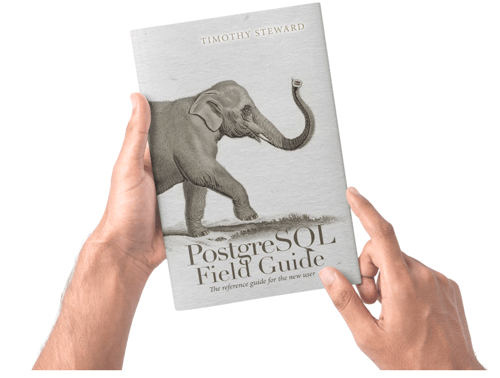
I realised there was no single, simple, practical reference that spoke directly to people like me—experienced with another database, but new to Postgres and unsure where to start. That’s why I wrote PostgreSQL Field Guide: The reference guide for the new user—to fill that gap and give others the resource I wish I’d had. That is the spirit behind this book. The goal is to help you ramp up on Postgres quickly, understand where to find the basics, and build a foundation without feeling overwhelmed. Once comfortable with the fundamentals and you have a little real-world experience, you will be ready to dive into the more advanced Postgres books, documentation, and community resources.
I want this book to be the reference I wish I had when I made the transition. A practical, honest companion that helps you appreciate the flexibility of Postgres and the power and innovation that the open-source database world offers.
Your path to PostgreSQL mastery
 Many PostgreSQL books focus on advanced topics aimed at seasoned users—not on newcomers who may have discovered PostgreSQL through development work or internal projects guiding them toward open-source solutions. I wrote this book for those users. If that sounds like you, this reference guide will support you on your journey, helping you grasp the core concepts that prepare you for more advanced PostgreSQL literature.
The guide is organized into key sections, each designed to stand on its own so you can quickly refresh your knowledge whenever needed. It fills common gaps and walks you from implementation to deployment, giving you a practical understanding of what’s possible with PostgreSQL.
You can get the book online at your favorite bookstore and use it as a reliable companion as you build and deepen your PostgreSQL expertise.


 PostgreSQL Insider

