




Data foundations for smart manufacturing
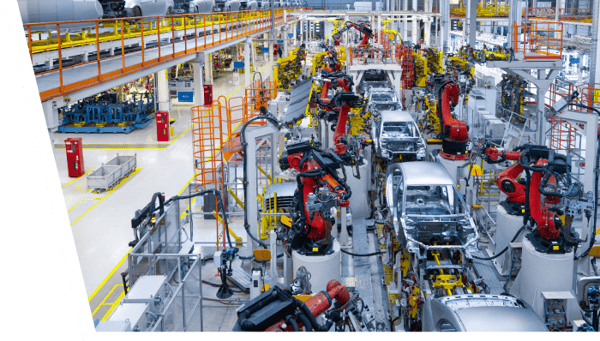 Manufacturing companies increasingly depend on data to manage production lines, supply chains, equipment maintenance, product quality, inventory, and customer orders. As factories adopt industrial Internet of Things devices, automated machinery, robotics, and advanced analytics, their database platforms must process growing volumes of operational data while remaining secure, available, and cost-effective. For organizations pursuing manufacturing database modernization, Fujitsu Enterprise Postgres can support these requirements by combining the flexibility of open-source PostgreSQL with additional capabilities designed for enterprise and mission-critical systems.
One of its most important benefits for manufacturers is operational reliability. Production systems may rely on databases to store work orders, machine readings, material requirements, production schedules, and quality-control results. If the supporting database becomes unavailable, manufacturing activities may slow down or stop entirely. Fujitsu Enterprise Postgres includes resilience capabilities such as disaster recovery, database mirroring, connection management, duplicated write-ahead logs, and high-speed backup and recovery. These features can help manufacturers reduce downtime, protect production data, and recover more quickly from infrastructure failures. This level of resilience is especially valuable for manufacturers where database availability directly impacts production uptime.
Protecting critical manufacturing data
 The platform can also help manufacturers strengthen data security and governance. Manufacturing databases may contain confidential product designs, supplier pricing, customer information, employee records, production formulas, and intellectual property. Fujitsu Enterprise Postgres provides Transparent Data Encryption to protect stored data, Data Masking to limit the exposure of sensitive information returned by queries, and a Dedicated Audit Log that records selected database activities. Audit records can help security teams determine who accessed information, when it was accessed, and what actions were performed. These controls are useful for internal governance, regulatory compliance, customer requirements, and investigations of potentially unauthorized activity. For manufacturers operating in regulated industries, these capabilities can help support security and compliance initiatives while protecting valuable intellectual property.
Another advantage is its support for manufacturing analytics and performance-intensive workloads. Manufacturers often need to analyze large amounts of production history, sensor data, defect information, inventory movement, and equipment-performance data. Fujitsu Enterprise Postgres includes performance enhancements such as Global Meta Cache, High-Speed Data Load, and Parallel Scan. These capabilities can improve the handling of complex queries and large datasets, supporting applications such as production reporting, quality analysis, demand planning, predictive maintenance, and operational dashboards.
Hybrid cloud flexibility for manufacturers
 Fujitsu Enterprise Postgres may also support a manufacturer’s application-modernization strategy. Because it is based on PostgreSQL, organizations can use a broad ecosystem of PostgreSQL-compatible applications, development languages, tools, and technical skills. Manufacturers can deploy the database on traditional infrastructure, in containers, on Kubernetes, or across hybrid and multi-cloud environments. This flexibility allows a company to keep latency-sensitive factory applications close to the production floor while placing reporting, development, analytics, or disaster-recovery environments in a private or public cloud. For organizations evaluating PostgreSQL for manufacturing, this deployment flexibility allows database architecture to align with operational requirements rather than infrastructure limitations.
This deployment flexibility is particularly valuable for manufacturers operating multiple plants. Individual facilities may require local database services so that production can continue even when external network connections are interrupted. At the same time, selected information from each facility can be consolidated into a central environment for corporate reporting, supply-chain planning, performance comparisons, and executive decision-making. Fujitsu Enterprise Postgres can therefore serve as a common database platform across factory, data-center, and cloud environments.
Reducing database vendor lock-in
 Manufacturers seeking to reduce their dependence on expensive proprietary databases may also benefit from Fujitsu Enterprise Postgres. Its PostgreSQL foundation can provide a more open migration path than a traditional closed database platform. Fujitsu states that the product maintains compatibility with PostgreSQL while adding enterprise capabilities for security, performance, reliability, and administration. This approach can help organizations modernize legacy manufacturing applications while reducing vendor lock-in and preserving access to PostgreSQL skills and tools. For many organizations, manufacturing database modernization is not simply about replacing an existing database. It is also an opportunity to standardize on an enterprise PostgreSQL platform that supports future growth and modernization initiatives.
For example, a manufacturer could use Fujitsu Enterprise Postgres as the data platform for a manufacturing execution system. The database could maintain production orders, machine status, operator activity, inspection results, and product genealogy. High-availability features would help keep the system running, encryption would protect sensitive production information, audit logs would support traceability, and analytical features could help engineers identify recurring defects or equipment-performance problems. The same platform could also integrate with enterprise resource planning, warehouse management, supplier, and business-intelligence applications. This makes Fujitsu Enterprise Postgres well suited for manufacturers seeking a PostgreSQL database that supports MES, ERP, predictive maintenance, industrial IoT, and enterprise analytics from a common platform.
Building a modern manufacturing data platform
 In conclusion, Fujitsu Enterprise Postgres can help manufacturing organizations build a secure, reliable, and adaptable data foundation. Its combination of PostgreSQL compatibility, enterprise security, high availability, performance enhancements, backup and recovery, and hybrid-cloud deployment options makes it suitable for important manufacturing workloads. When implemented with appropriate architecture, governance, and operational processes, it can help manufacturers protect production data, improve system availability, modernize legacy applications, support data-driven decisions, and reduce the risks associated with proprietary database dependence. Organizations evaluating manufacturing database modernization or PostgreSQL for manufacturing can use Fujitsu Enterprise Postgres to build a modern enterprise data platform that supports operational resilience, security, analytics, and long-term flexibility.
 Keep production running: Unplanned database downtime stops the shop floor. Our high-availability features (disaster recovery, and fast backups) minimize outages and get you back online quickly if failures occur.
 Protect your crown jewels: Product formulas, supplier pricing, and employee data must stay secure. Built-in encryption and detailed audit logs controlling who sees what providing a clear trail for compliance and regulations.
 Turn data into action: From predictive maintenance to quality control, the platform accelerates complex analytics. It handles massive sensor and production histories effortlessly, supporting real-time dashboards and planning.
 Reduce costs and lock-in: Ditch expensive proprietary databases. Because it’s PostgreSQL-based, you can leverage existing skills and tools. Deploying it anywhere, on-premises, for latency-sensitive machines, or in the cloud for analytics and disaster recovery.
 The multi-plant advantage: Keep each factory running independently during network outages, while seamlessly consolidating data to the headquarters for enterprise-wide reporting and supply chain planning.
Choose Fujitsu Enterprise Postgres for a secure, resilient, and flexible data backbone that supports your modernization goals, protects your margins, and keeps your lines moving.


 PostgreSQL Insider

