


While taking control of your data sounds right in principle, true control starts with understanding where your data resides and exactly what data you have. That knowledge is the first step toward achieving real data sovereignty.
What data sovereignty really means
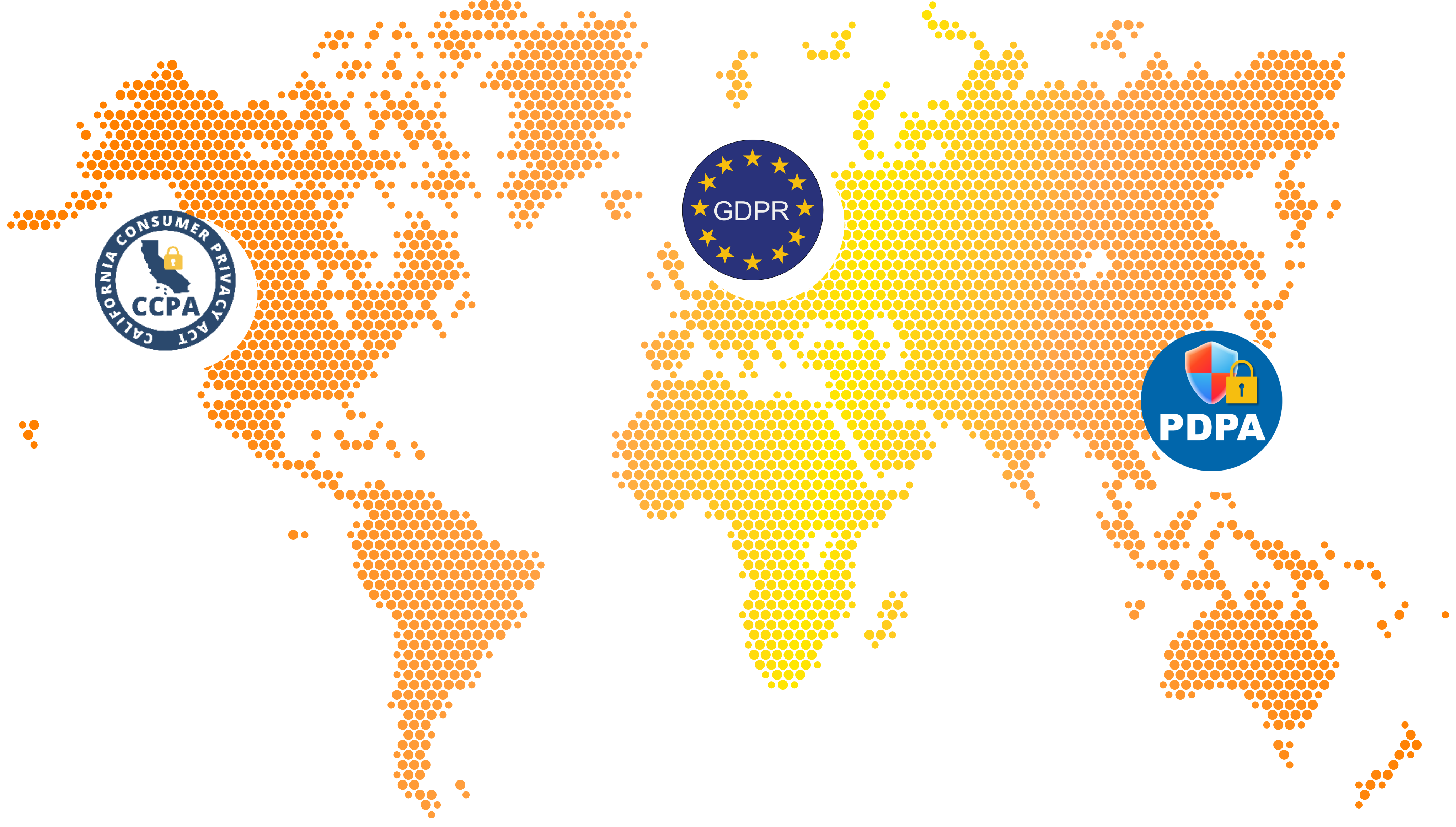
By definition, data sovereignty is the principle that digital data is subject to the laws of the country in which it is located or collected. These laws define data-localization requirements that affect everything from the emails we open to the files we download and the data we store or transmit. Most of us know these regulations by their abbreviated names: GDPR, CCPA, and PDPA, and they are designed to reduce data breaches, prevent loss of trust, and avoid penalties by controlling how data is stored, processed, and transferred.
- GDPR (General Data Protection Regulation): European Union
- CCPA (California Consumer Privacy Act): United States
- PDPA (Personal Data Protection Act): Asia
Given today’s global work environment, nearly 68% of tech workers now work remotely. This means they access data from a wide range of locations, which may be a plush Airbnb or across the globe on possibly unstable networks or hotspots.
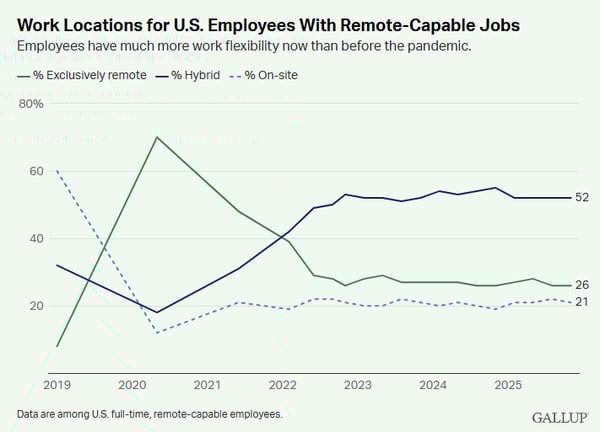
Source: https://www.gallup.com/401384/indicator-hybrid-work.aspx
When data crosses borders
 Remote work may be one of the factors driving the surge in data sovereignty concerns. Sovereignty exists to prevent unauthorized cross-border data movement and to protect privacy and national security. In its simplest form, cross-border data movement affects me personally. I live in the U.S. Great Lakes region, where my state borders Canada.
In my opinion, this causes daily cross-border data movement, and most people don’t even think it’s serious. Being so close to the parks along the lake, a nice friendly walk filled with selfies allows your phone to roam from US-based AT&T or Verizon over to Canadian Rogers wireless. This means that, technically, every picturesque lake selfie or text message crosses over into Canada then back to the US.
Could a simple example of cellular data roaming be that important? Depending on who you ask it may not. But understanding how companies are handling your data and where it resides is why data sovereignty matters. When you apply this same scenario to enterprise technology, it becomes clearer why organizations like AWS or Google offer region-specific clouds to comply with regulatory compliance, focusing on security and privacy to help reduce exposure while building their customer’s trust.
How can PostgreSQL help with data sovereignty?
 Unlike some proprietary databases, PostgreSQL’s flexibility makes it ideal for sovereign deployments through configurable settings and region-specific hosting options, particularly in the EU. Features such as pg_crypto or full-disk encryption, combined with asynchronous replication across compliant zones without crossing national borders, can help meet GDPR requirements and support data protection by design. Implementing common best practices, such as SSL/TLS encryption, pg_audit, and comprehensive monitoring, is also essential to a secure and compliant setup.
In PostgreSQL, you’ll find many recommended security audits, but it is beneficial to create a separate audit focused specifically on data sovereignty. A true sovereignty audit should track not only who accessed which data, but also where that access occurred. While traditional audits typically record user and object-level activity, location has become a critical dimension.
Encryption at rest is another essential requirement, but it is equally important to protect data in transit. This includes knowing exactly where data is moving to and from, and ensuring that automated compliance tools such as Ansible are in place to help enforce local data residency and regulatory requirements.
 Control over your data and where it resides often brings to mind a common culprit many of us are guilty of: the everlasting email inbox. We create folders in Outlook or Gmail to stay organized, which sounds effective, at least in theory. But one of the most overlooked aspects of data sovereignty is data retention, and this includes email.
How many of us neglect to clean out overflowing folders or even our main inbox? From a legal and compliance perspective, retaining data longer than necessary, often beyond seven years, can create unnecessary risk. In today’s world, we should treat data like money: if you value it, you must manage it carefully and protect it from falling into the wrong hands.
Speaking of wrong hands, let’s look at some healthcare examples illustrating situations that can easily be adapted to other use cases using PostgreSQL features.
Hospitals are both data guardians and enablers, handling enormous amounts of sensitive information while allowing many different people and systems to access it on a regular basis.
Purposeful access control
Create roles for different job functions
CREATE ROLE doctor_cardiology NOINHERIT;
CREATE ROLE billing_staff NOINHERIT;
CREATE ROLE public_health_analyst NOINHERIT;
Cardiology doctors get full read access to the cardiology schema
GRANT USAGE ON SCHEMA cardiology TO doctor_cardiology;
GRANT SELECT ON ALL TABLES IN SCHEMA cardiology TO doctor_cardiology;
Using views for safe sharing
Create view from patient records
CREATE VIEW v_flu_case_summary AS
   SELECT date_trunc('week', admission_date) AS week_start,
          COUNT(*) AS case_count,
          ROUND(AVG(age)) AS avg_age
   FROM patient_records
   WHERE diagnosis_code = 'J10' -- Influenza
     AND consent_public_health = true
   GROUP BY 1;
GRANT SELECT ON v_flu_case_summary TO public_health_analyst;
Data minimization and retention
Create materialized view and delete old records
CREATE MATERIALIZED VIEW mv_monthly_admissions AS
   SELECT date_trunc('month', admission_date) AS month,
          department,
          COUNT(*) AS admission_count
   FROM patient_records
   GROUP BY 1, 2;
DELETE FROM patient_records
WHERE admission_date < NOW() - INTERVAL '7 years'
Anonymization for research – De-identifying at the source
Anonymize patient data
SELECT anonymize_integer(age, 5) AS age_band,
       diagnosis_code,
       anonymize_zip(zip_code, 3) AS zip_prefix
FROM patient_records
WHERE consent_research = true;
Federated access – Cross-hospital collaboration without raw data sharing
Share aggregated data
CREATE EXTENSION postgres_fdw;
CREATE SERVER hospital_b FOREIGN DATA WRAPPER postgres_fdw
    OPTIONS (host 'hosp-b.example.org', dbname 'analytics');
IMPORT FOREIGN SCHEMA analytics FROM SERVER hospital_b INTO hosp_b_data;
PostgreSQL as a sovereign platform
 Empowering data sovereignty requires more than choosing the right database. It demands flexibility, strong security controls, and the initiative to actively assess and govern where and how data is stored, accessed, and protected. By implementing a sovereign audit, organizations can gain clear visibility into their data landscape, identify compliance gaps, and make informed decisions aligned with regulatory and operational requirements.
PostgreSQL’s open, extensible architecture provides the transparency and control needed to support these efforts, enabling businesses to build compliant, resilient, and future-proof data platforms. With the right governance practices in place, PostgreSQL becomes not just a database of choice, but a strategic foundation for long-term data sovereignty.


 PostgreSQL Insider

